

Piggyback Sheet Labels
A piggyback label is two labels in one: a printed top layer riding on a second adhesive layer underneath it. Peel the top one off and it re-sticks somewhere else, while the label beneath stays exactly where you applied it. Supplied on 8.5″ x 11″ sheets, that construction runs through the desktop laser or inkjet printer you already own — no roll printer, no applicator, and no minimum order of ten thousand.
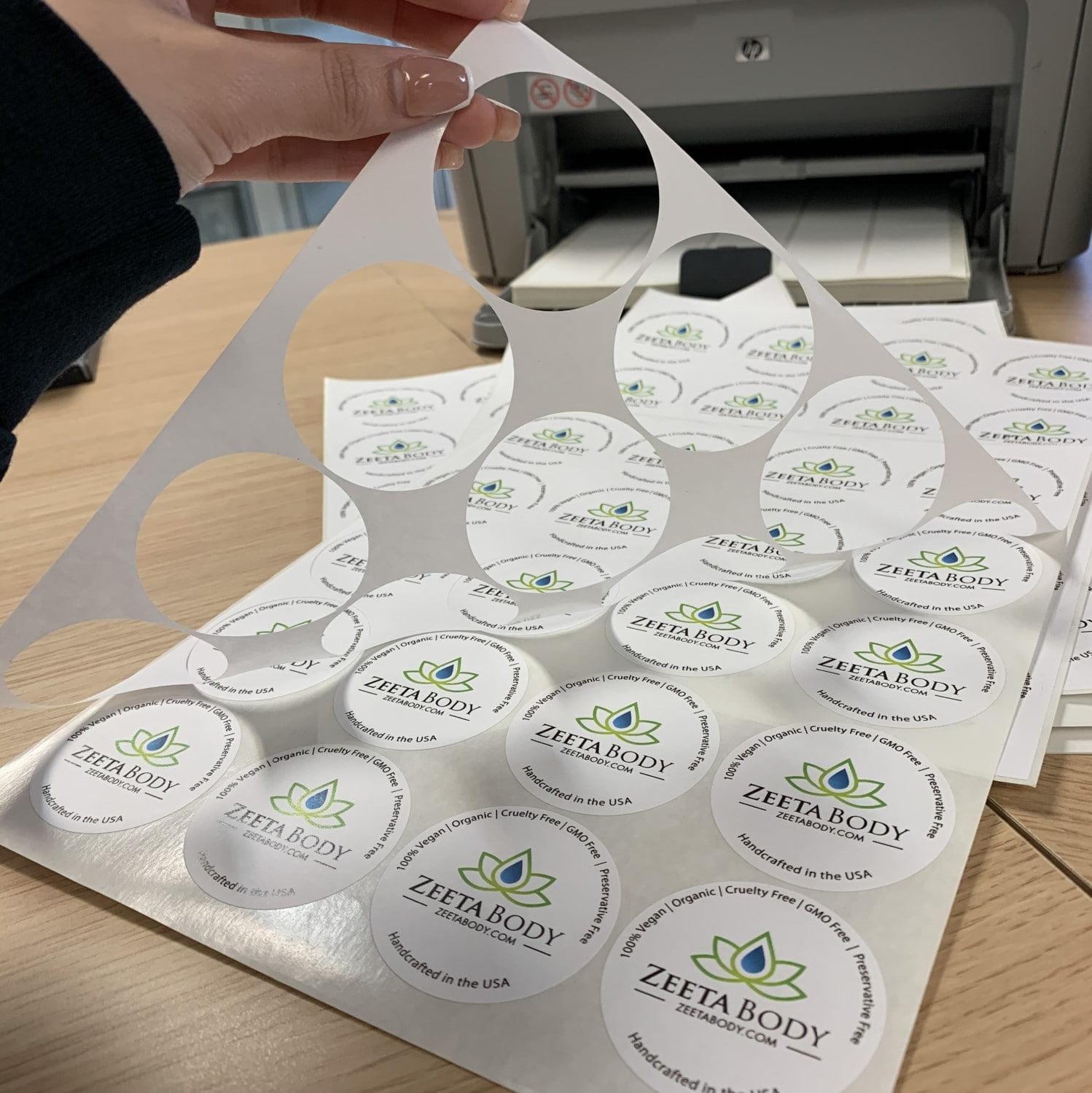
How the construction works
An ordinary pressure-sensitive label is three layers: the facestock you print on, an adhesive, and a slick liner you throw away. A piggyback is five. The printed face carries its own adhesive and sits on a middle layer that is a finished label in its own right, coated with a second adhesive on its underside; that whole sandwich sits on the release liner. Apply it once and you have delivered two labels at the same time — the base label holds the carton, the card or the form, and the top label rides along until somebody needs to move the information somewhere else.
What the sheet format changes
On a sheet, a piggyback is roughly twice the caliper of the label stock a desktop printer expects, because two facestocks and two adhesive coats go through in a single pass. That one fact drives most of the practical advice:
- Use the straightest paper path your printer offers — the rear or manual feed tray rather than the cassette — so the sheet is never forced around a tight roller bend.
- Print single-sided. Duplexing sends the sheet back through the rollers a second time, and that is where edges start to lift.
- Let sheets reach room temperature before printing. Stock brought in cold, or stored damp, curls in a hot fuser.
- Run full sheets. A part-used sheet with labels missing exposes the liner to the rollers and collects dust on the cut edges.
What our customers put on them
Anything where a piece of printed information has to start in one place and finish in another: return and RMA labels a customer peels off the box and sticks on the replacement carton; transfer labels that move a lot or serial number from a pallet onto the paperwork; sample and swatch cards; coupons and loyalty stickers on a display card; inspection or calibration stickers that get re-applied after service; direct-mail response pieces where the recipient peels their own details onto a reply card. In every case the value is the same — the person handling it does not have to write anything out twice.
Sheets or rolls?
If the labels are machine-applied, the artwork never changes and the run is in the tens of thousands, rolls are the cheaper route. If the data changes from label to label, the run is short, or you want to print them yourself on the day, sheets win. The construction is identical; only the format and the printing method differ.
What to tell us for a quote
Finished size and how many labels you want per sheet; what the top layer has to stick to after it is peeled off (a smooth carton, a poly bag and a cold-store pallet all want different adhesives); paper or synthetic top layer; whether the bottom label is meant to be permanent or removable; and the make and model of the printer that will run them. Send us that and we will match the stock and get you a quote — with a sample sheet to run through your own printer before you commit.
Popular label formats
Rolls, sheets and die-cut shapes — paper, coated paper, waterproof poly and more.


Need custom piggyback sheet labels?
Tell us your product, size and quantity — we'll recommend the right material and send free samples.