

Meat Labels
Meat packs carry liquid. Purge collects in the tray, it gets on the film, and it gets on whoever handles the pack. Add a chiller that makes the outside sweat and a freezer that makes it frost, and a meat label spends its entire life on a wet surface.
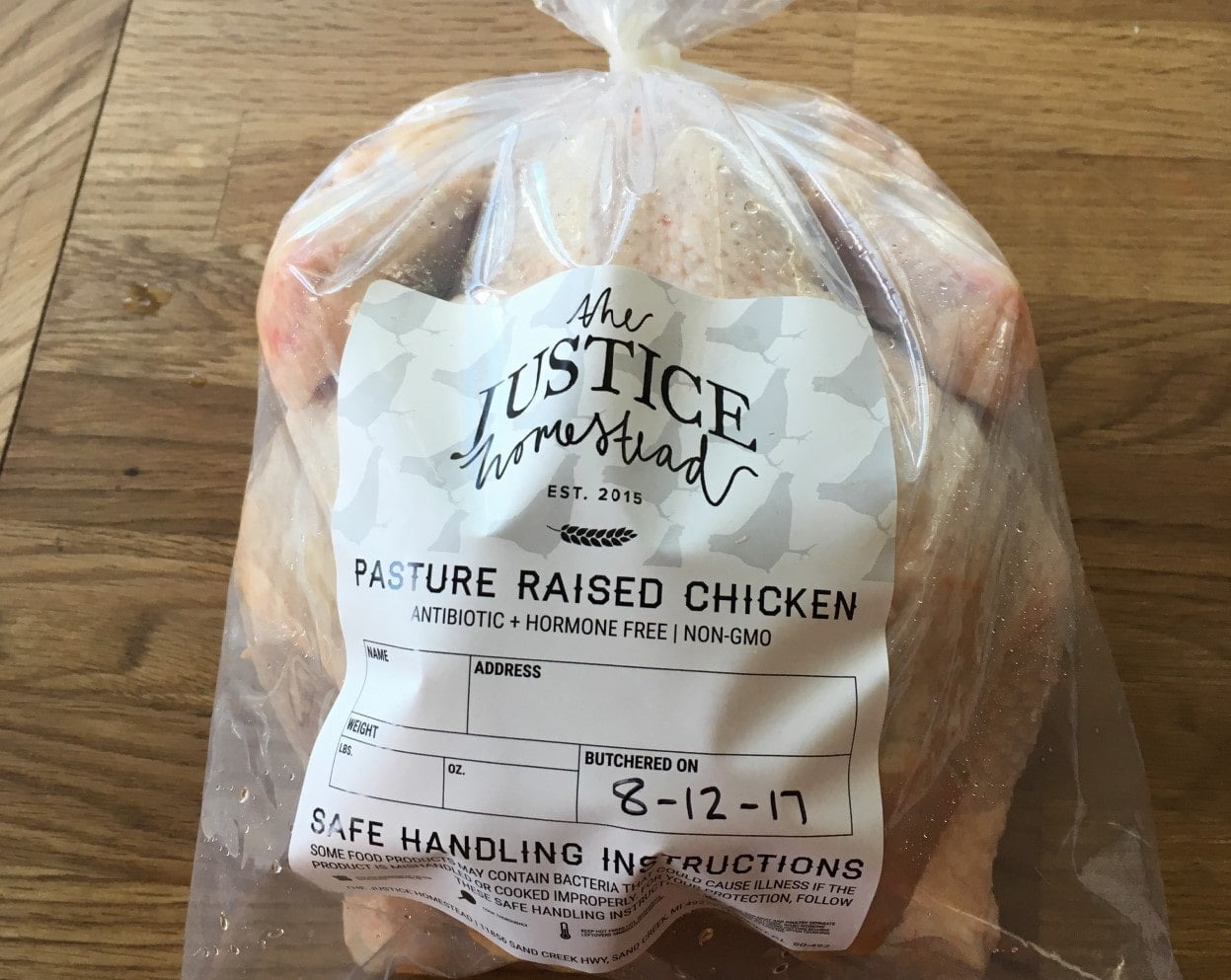
Why meat labels have to handle a wet pack
Paper facestock is the first thing to go. It wicks purge and condensation, swells at the edges and turns the print soft, and on a protein pack that reads as unhygienic long before it reads as a printing fault. We build on synthetic stock, polyester, BOPP or vinyl, which takes on nothing and wipes clean.
The adhesive is FDA approved and food-grade, applies down to −20 °F so it will bond to packaging that is already frozen, and holds to −60 °F. That matters on a line where labels go on after the blast freezer rather than before it. The print goes under a laminate so the barcode still scans through frost and the copy survives wet hands.
Meat labels for trays, vacuum packs and case-ready film
Case-ready trays with a film lid give you a flat top panel, which is the easy version of this job. Vacuum skin packs are harder: the film is glossy, it is drawn tight over an irregular shape, and it flexes when the pack is handled, so the label needs to move with it rather than lever itself off at a corner. Larger primal and foodservice packs are different again, bigger format and simpler artwork, heavy on lot and date coding.
Tell us which of those you are on before you choose a stock. It changes the facestock more than the product inside does.
Weigh-price and scale labels
Most fresh meat is priced by weight at the counter or on the line, which means a label printed on your own scale rather than by us. Blank stock has to run cleanly through that printer and still hold on a cold wet tray, which is a combination a general-purpose blank does not manage. We supply freezer-rated blanks sized for scale printers, so the label that comes out of your scale behaves like the ones we print.
Plenty of butchers and producers use both: a custom printed label for the branded range, blanks for anything cut and weighed to order.
Copy, coding and quantities
Meat labels carry a long line of information: cut, weight, use-by, storage and cooking instructions, lot code and traceability data. Variable data prints on the same pass, so lot and pack date do not need a second sticker. There are no minimums, so a farm shop ordering two hundred is a normal order.
Send us the copy and we will set it legibly at the size the pack allows. What your product is required to declare, including any certification wording, is a question for your regulatory adviser rather than for us.
Learn more
Popular label formats
Rolls, sheets and die-cut shapes — paper, coated paper, waterproof poly and more.


Need custom meat labels?
Tell us your product, size and quantity — we'll recommend the right material and send free samples.